
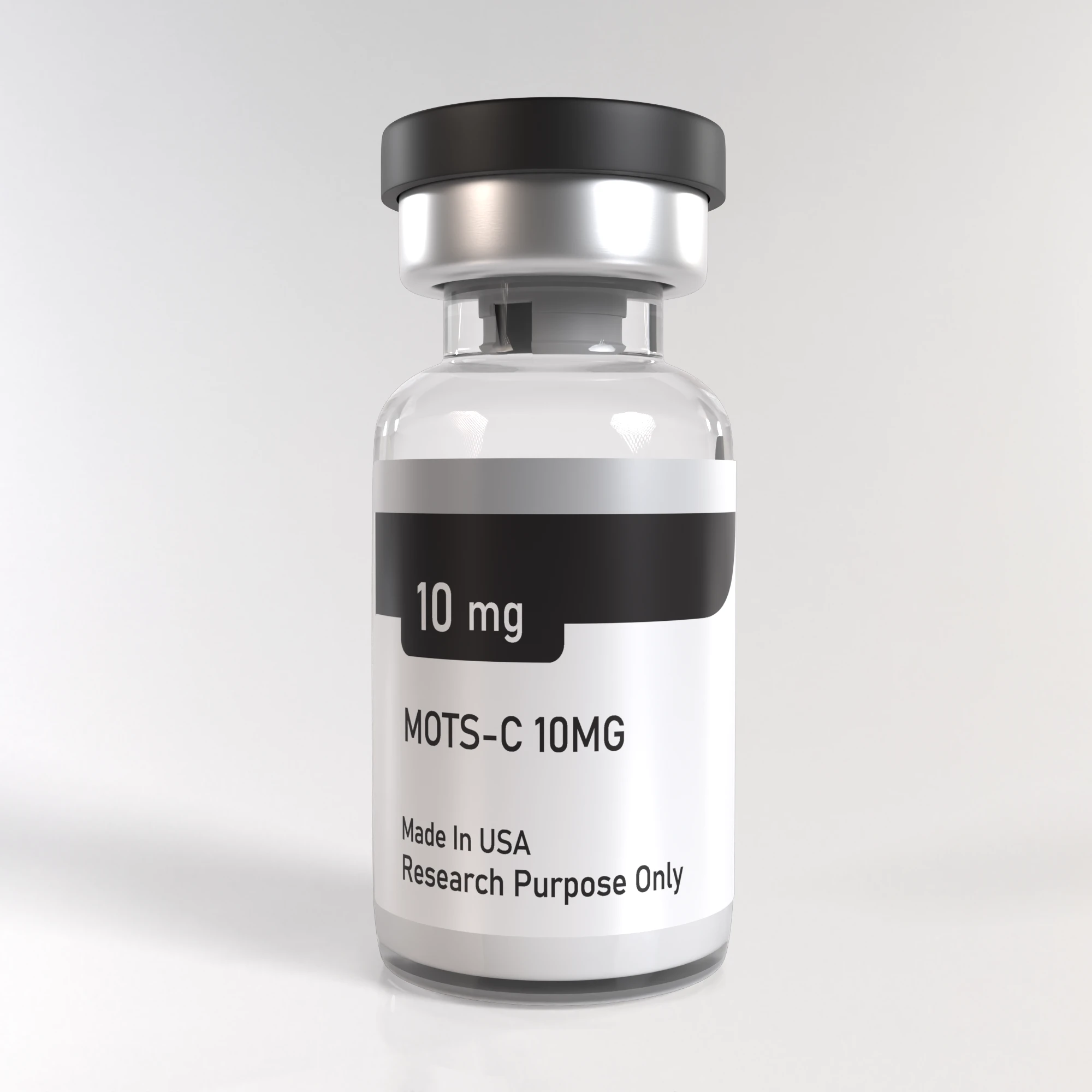

MOTS-C 10MG
MOTS-C (Mitochondrial-encoded Open Reading Frame Small Cysteine-rich protein) is a naturally occurring peptide derived from mitochondrial DNA. This product is intended for research purposes and is a research-use-only (RUO) compound in the peptide category. MOTS-C is under active investigation for its potential biological roles and mechanisms in cellular processes.
Research Context
MOTS-C was first identified in 2013 through screening of mitochondrial open reading frames (ORFs) in mammals, including humans. Unlike most mitochondrial proteins, which are short and functional as small peptides, MOTS-C is a relatively long, cysteine-rich peptide that retains the sequence encoded by the mitochondrial genome. Initial research focused on its potential role in regulating mitochondrial function, energy metabolism, and cellular stress responses. Subsequent studies have expanded its investigation into broader areas of bioenergetics, aging, and metabolic pathways.
Research Overview
MOTS-C is hypothesized to function as a mitochondrial regulator due to its sequence homology to known mitochondrial proteins and its potential to influence gene expression related to oxidative phosphorylation and autophagy. Early studies suggested that exogenous administration of MOTS-C could modulate mitochondrial biogenesis, enhance cellular resilience under metabolic stress, and potentially improve mitochondrial quality control. Research has also explored its role in modulating inflammatory responses and metabolic homeostasis, although findings remain preliminary and are contingent on further experimental validation.
Key Research Focus Areas
- Mitochondrial Function and Biogenesis: Investigation into how MOTS-C influences the expression of nuclear-encoded genes regulating mitochondrial activity, including PGC-1α and SIRT1, which play critical roles in adaptive responses to metabolic demand.
- Cellular Stress Response: Exploration of MOTS-C’s potential to mitigate oxidative stress and improve cellular energy balance under conditions such as nutrient deprivation or metabolic overload.
- Metabolic Regulation: Examination of MOTS-C’s effects on glucose and lipid metabolism, with potential implications for studying age-related metabolic decline and disorders such as diabetes or obesity.
- Inflammatory and Immune Pathways: Investigation into how MOTS-C may modulate inflammation within mitochondrial pathways, including interactions with NF-κB and other stress-activated kinases.
- Aging and Longevity: Emerging research into MOTS-C’s role in modulating age-related mitochondrial dysfunction, though findings are speculative and require additional study.
Important Safety and Compliance Note
The administration of peptides, including MOTS-C, requires careful consideration of experimental design, dosages, and biological contexts. Due to its potential interaction with cellular pathways, MOTS-C should only be used in accordance with approved research protocols and under the supervision of qualified scientists. This product is intended solely for research purposes and is not authorized for human or animal consumption. Any use outside a controlled academic or institutional setting is prohibited.
For research use only. Not for human or animal consumption.




Reviews
There are no reviews yet.