
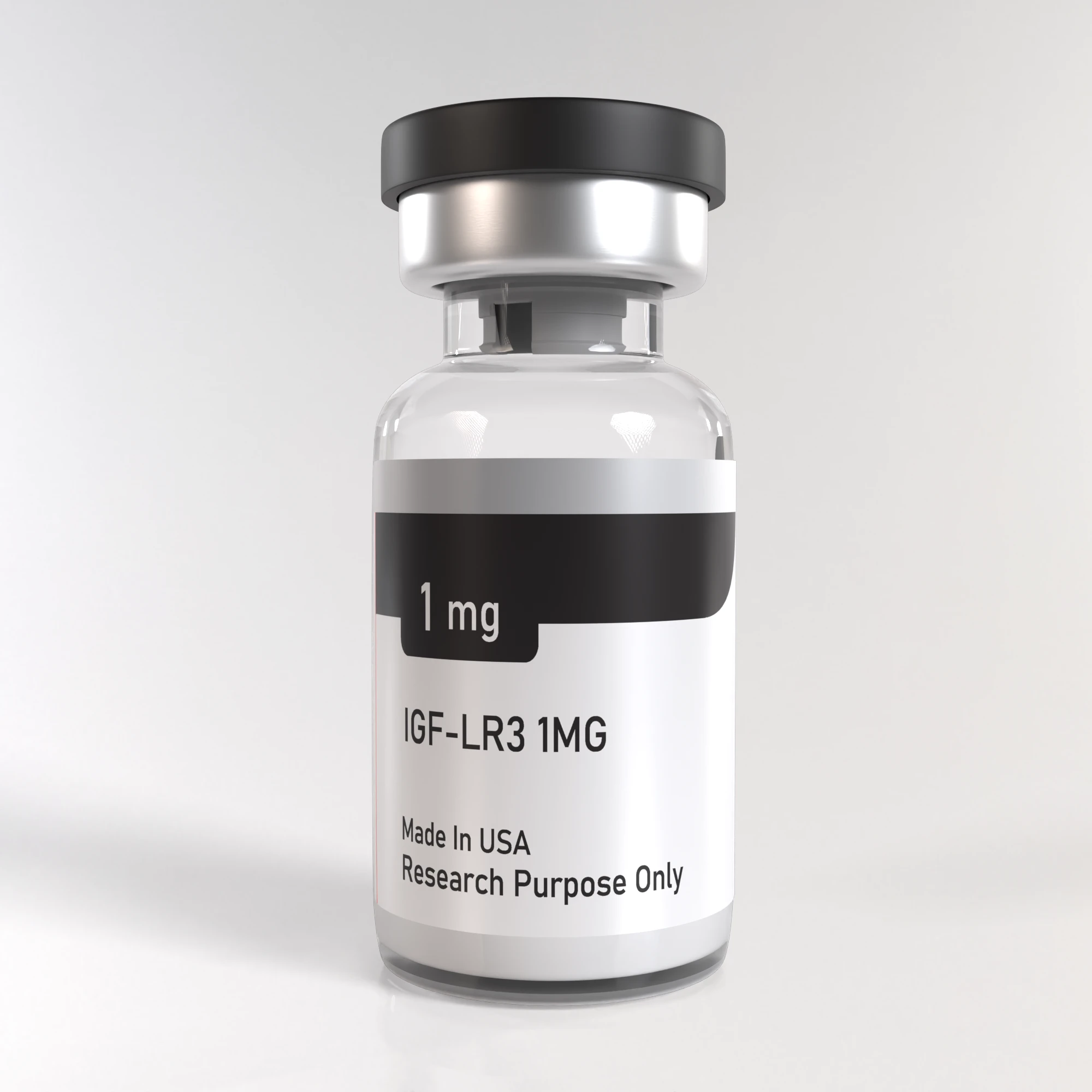

IGF-LR3 Peptide
IGF-LR3 (Insulin-like Growth Factor-1 Receptor Ligand 3) is a synthetic peptide designed for research applications. This molecule is derived from the insulin-like growth factor system and is commonly investigated in preclinical studies focused on biological signaling pathways, aging research, and tissue regeneration.
Research Context
IGF-LR3 is part of a family of peptides that interact with insulin-like growth factor receptors (IGF-1R), which play a critical role in cellular growth, differentiation, and metabolism. In animal models, IGF-LR3 has been studied for its potential effects on wound healing, muscle repair, and cellular longevity. Due to its structural similarities to natural growth factors, it is often used in experimental settings to explore mechanisms of action in various biological systems.
Research Overview
IGF-LR3 has been investigated in preclinical research as a tool to study the IGF-1 signaling pathway. Its use in studies may involve examining its impact on protein synthesis, tissue regeneration, and anti-apoptotic effects. While its exact functional outcomes can vary depending on the experimental context, IGF-LR3 serves as a valuable research reagent for understanding receptor-mediated signaling processes.
Key Research Focus Areas
- Cellular Signaling: Exploration of IGF-1 receptor activation and downstream effects in various cell types.
- Tissue Regeneration: Examination of potential regenerative effects in wound healing and muscle repair models.
- Longevity and Aging Research: Investigation of peptide-mediated effects on cellular aging and longevity in animal models.
- Pharmacological Tools: Utilization as a research reagent to study IGF-1R-mediated biological processes.
Safety and Compliance
This peptide is provided for research use only and is intended for use in controlled laboratory settings by qualified researchers. Handling IGF-LR3 requires adherence to standard biosafety protocols to minimize potential risks associated with experimental manipulation of biological molecules. Always follow institutional guidelines for proper storage, disposal, and experimental procedures.
For research use only. Not for human or animal consumption.
Reviews
There are no reviews yet.