
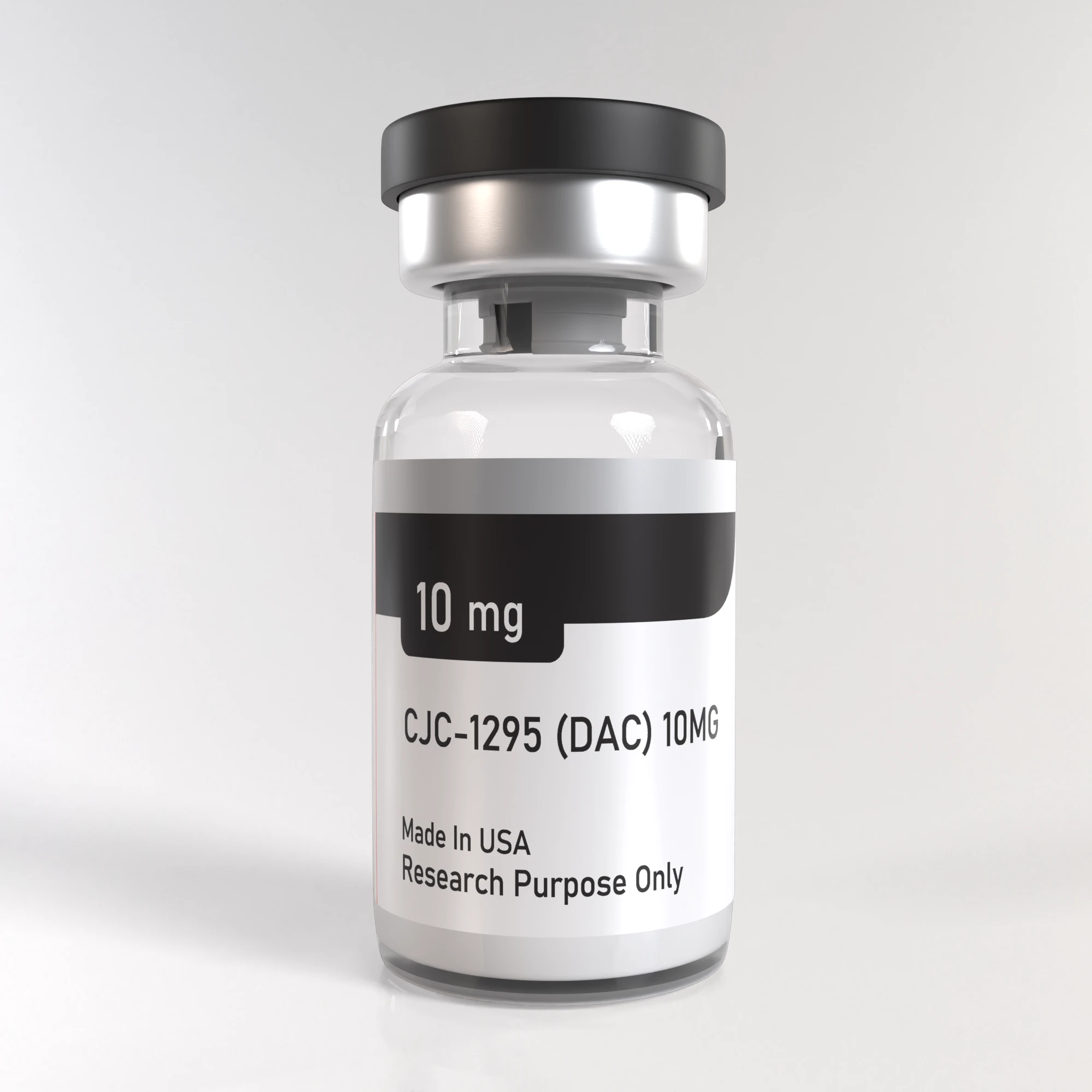

CJC-1295 (DAC) 10 MG – Research-Use-Only Peptide
CJC-1295 (also known as DAC, desacetyl-CJC-1295) is a modified analogue of the synthetic peptide CJC-1295, developed for scientific investigations. This fragment retains critical structural properties while potentially altering pharmacokinetic behavior, making it a valuable tool in peptide research. Below is detailed information for researchers exploring its properties under controlled academic conditions.
Research Context
CJC-1295 and its derivatives, including DAC, are frequently used in studies examining growth hormone (GH) signaling, cell proliferation, and inflammation regulation. DAC is notable for its reduced metabolic clearance compared to native CJC-1295, enabling prolonged in vivo exposure—useful for longitudinal research models. The compound’s mechanism involves agonism of the GH-releasing hormone receptor (GHRHr) and modulation of pituitary GH secretion, which can influence experimental outcomes in various biological systems.
Research Overview
CJC-1295 (DAC) has been studied primarily in animal models, where it demonstrates distinct pharmacokinetic profiles compared to its parent molecule. Its use in research often involves:
- Investigations into GH resistance syndromes and compensatory growth mechanisms, particularly in conditions where endogenous GH signaling is impaired.
- Studies of anti-aging effects in preclinical settings, including oxidative stress mitigation and tissue regeneration models.
- Exploration of its role in cancer research, particularly in tumor growth dynamics under GH-dependent conditions.
- Assessment of neuroprotective potential in neurodegenerative diseases, such as Alzheimer’s or Parkinson’s, through GH/GHRH pathway modulation.
Key Research Focus Areas
-
Pharmacokinetics and Metabolism
- Comparison of DAC’s half-life vs. CJC-1295 in vivo, including liver and kidney clearance pathways.
- Dose-response curves in various species, identifying optimal concentrations for experimental reproducibility.
-
Biological Activity and Signaling
- GHRHr agonism and downstream GH pulsatility patterns in pituitary glands.
- Effects on insulin-like growth factor-1 (IGF-1) levels and tissue-specific responses (e.g., muscle, liver, cartilage).
-
Toxicology and Safety Profiles
- Evaluation of acute and subchronic toxicity in rodents and non-human primates.
- Cardiovascular and metabolic side effects, including hyperglycemia or hypertension.
-
Cross-Species Validation
- Translational relevance to human GH/GHRH biology, including species-specific receptor affinity.
- Investigation of off-target effects in non-GH pathways (e.g., inflammation, apoptosis).
For research use only. Not for human or animal consumption.
Reviews
There are no reviews yet.